
Quick way to grow your kitchen setup with 5 essential silicone cooking utensils
Quick way to grow your kitchen setup with 5 essential silicone cooking utensils
Introduction
Have you ever found yourself struggling with metal spatulas that scratch your expensive nonstick pans or wooden spoons that stain and absorb food odors? Let me tell you, I faced this exact problem for years until I discovered the magic of switching to silicone cooking utensils. These flexible heat resistant tools completely transformed how I cook and protect my cookware. From my experience, adding just five essential kitchen tools made from silicone to my setup solved almost every frustration I had in the kitchen.
In this guide, we will explore the top five silicone utensils every home cook needs, how to choose the right ones, and practical ways to use them to improve your daily cooking routine. Whether you are just starting out or looking to upgrade your current collection, these versatile tools will make your time in the kitchen easier safer and more enjoyable.

Materials and Supplies
Before we dive into the details, let me share what you actually need to build a solid foundation with silicone tools in your kitchen.
Essential Items
Silicone Spatula
This is your go to tool for flipping pancakes, eggs, or grilled cheese without damaging your pan surface. Look for one with a sturdy handle and a flexible yet firm head. Trust me, this single tool will become your most used kitchen companion.
Silicone Slotted Spoon
Perfect for draining vegetables from boiling water or lifting foods from liquids while leaving the broth behind. The slots allow liquid to pass through while keeping your food secure.
Silicone Whisk
Unlike metal whisks that clang and scratch, a silicone whisk works quietly and protects your bowls and pans. From my experience, it works beautifully for scrambling eggs or mixing sauces right in nonstick cookware.
Silicone Tongs
These give you precision control when turning meats, tossing salads, or grabbing hot items. The soft tips grip food gently without piercing or tearing.
Silicone Spoonula
A hybrid between a spoon and a spatula, this versatile tool scrapes every bit of batter from bowls and stirs thick mixtures effortlessly.
Optional Upgrades
Silicone Pastry Brush
Great for brushing oil on pans or glazing baked goods. The bristles are easy to clean and do not shed like traditional brushes.
Silicone Ladle
Ideal for serving soups and stews without scratching your favorite pot.
Silicone Basting Brush
Perfect for marinating meats or applying butter during roasting.
Possible Alternatives
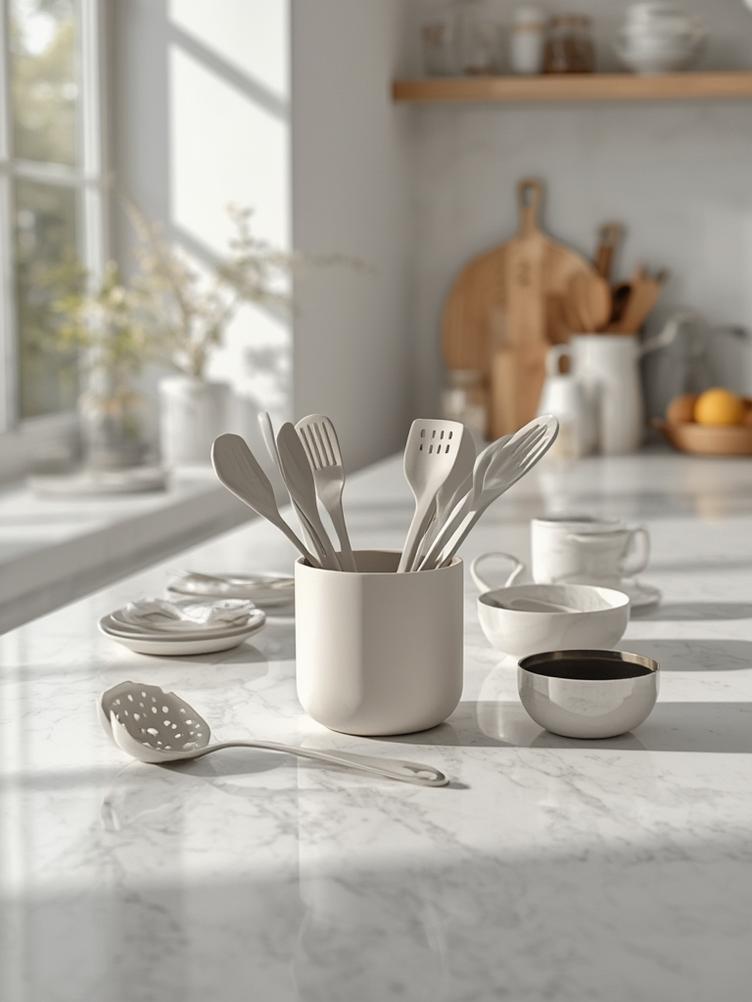
If you are on a budget, you can start with just a silicone kitchen utensil set that includes three to five basic pieces. Many affordable sets offer excellent quality and durability. You do not need to buy everything at once. Build your collection gradually based on what you cook most often.
Step by Step Instructions
Let me walk you through exactly how to integrate these five essential tools into your daily cooking routine.
Step 1: Start Your Morning with a Silicone Spatula
Use your silicone spatula to cook scrambled eggs or flip pancakes. The flexible edge slides smoothly under delicate foods without tearing them. Practical tip: Keep the heat at medium to avoid overheating the silicone, even though quality silicone can handle up to 600 degrees Fahrenheit.
Step 2: Prepare Lunch with the Slotted Spoon
When boiling pasta or blanching vegetables, use the silicone slotted spoon to lift food directly from the pot. This saves time and keeps your kitchen counter cleaner. Practical tip: Let the spoon rest on the pot edge briefly to allow extra water to drip back into the pot.
Step 3: Mix Sauces with the Silicone Whisk
For making gravy or whisking a quick salad dressing, the silicone whisk works wonders directly in your nonstick saucepan. From my experience, this prevents those annoying scratches that ruin pans over time. Practical tip: Use a gentle circular motion rather than aggressive beating to extend the life of both your whisk and your cookware.
Step 4: Grill or Sauté with Silicone Tongs
When cooking chicken breasts or sautéing vegetables, the tongs give you perfect control. The soft grip prevents food from slipping while the heat resistant material keeps your hands safe. Practical tip: Choose tongs with a locking mechanism for compact storage in your drawer.
Step 5: Bake and Scrape with the Spoonula
After mixing cake batter or cookie dough, use the spoonula to scrape every last bit from the bowl. This tool also works beautifully for folding ingredients together gently. Practical tip: The curved edge reaches into bowl corners better than flat spatulas.
Advantages and Culinary Benefits
Switching to silicone tools brought remarkable improvements to my kitchen routine. Let me share the benefits you will experience too.
Protects Your Cookware Investment
We spend good money on quality pots and pans. Silicone utensils ensure that nonstick coatings stay intact for years. Metal tools scratch and damage surfaces, leading to expensive replacements. Trust me, protecting your cookware saves hundreds of dollars over time.
Heat Resistant and Safe
Quality silicone withstands high temperatures without melting or releasing harmful chemicals. You can leave a spatula resting in a hot pan while you step away for a moment. This gives you flexibility and peace of mind during busy cooking sessions.
Easy Cleaning and Maintenance
Unlike wooden utensils that absorb stains and odors, silicone cleans up instantly. Most pieces are dishwasher safe, making cleanup a breeze after dinner. From my experience, even stubborn tomato sauce or curry washes off without leaving marks.
Gentle on Delicate Foods
The soft flexible material prevents tearing flaky fish or mashing tender vegetables. When you need precision and care, silicone delivers every time.
Healthier Cooking Environment
Silicone is non toxic and does not leach chemicals into your food, unlike some plastics when heated. This keeps your meals safe and healthy for your family.
Economical Long Term Investment
While the initial cost may seem higher than basic plastic tools, silicone utensils last for years without warping, cracking, or deteriorating. You actually save money by not replacing cheap tools repeatedly.
Eco Friendly Choice
Durable silicone tools reduce waste since you are not throwing away broken utensils frequently. We all benefit when we choose products that last longer and perform better.
Common Mistakes to Avoid
Let me share some errors I made when I first started using silicone tools so you can skip the learning curve.
Mistake 1: Using Low Quality Silicone
When I first bought silicone utensils, I grabbed the cheapest set I could find. The problem was that low quality silicone can contain fillers that make tools less heat resistant and more prone to damage. The solution is to invest in food grade silicone from reputable brands. Check product descriptions and reviews carefully before purchasing.
Mistake 2: Exposing Silicone to Open Flames
I made this mistake myself when I left a spatula touching the side of a gas burner. Even though silicone is heat resistant, direct flame contact can cause discoloration or damage. The solution is to keep tools away from direct flames and use them only on heated surfaces like pans or in ovens.
Mistake 3: Not Checking Temperature Ratings
Some silicone tools have lower heat tolerance than others. I once used a spatula rated for only 400 degrees in a very hot oven and it started to warp slightly. The solution is to always check the manufacturer temperature rating and match it to your cooking needs. For high heat cooking, look for silicone rated at least 500 degrees.
Mistake 4: Storing Tools Improperly
Cramming silicone tools into overstuffed drawers can bend or deform them over time. I learned this when my favorite spatula set ended up with permanent creases. The solution is to store them upright in a utensil holder or hang them on hooks to maintain their shape.
Mistake 5: Ignoring Cleaning Instructions
Even though most silicone is dishwasher safe, some items with wooden or plastic handles require hand washing. I damaged a beautiful spatula handle by running it through the dishwasher repeatedly. The solution is to read care instructions and hand wash any tools with mixed materials to extend their lifespan.
FAQs
Is silicone safe for cooking at high temperatures?
Yes, food grade silicone is safe for cooking at temperatures up to 500 or 600 degrees Fahrenheit depending on the quality. Always check the specific temperature rating for your utensils. From my experience, quality brands clearly state their heat resistance on the packaging.
How do I know if my silicone utensils are food grade?
Look for products labeled as 100 percent food grade silicone or FDA approved. You can also perform a simple twist test. Pinch and twist a flat surface. If white shows through, it likely contains fillers and is not pure silicone. Pure food grade silicone maintains its color when twisted.
Can silicone utensils go in the dishwasher?
Most silicone utensils are dishwasher safe, but always verify the manufacturer instructions. Tools with wooden or certain plastic handles may need hand washing. I run my pure silicone pieces through the dishwasher regularly without any issues.
Do silicone utensils stain or absorb odors?
High quality silicone resists staining and odor absorption much better than wood or plastic. Occasionally, strong spices like turmeric may cause temporary discoloration, but it typically fades with washing. Trust me, they perform far better than traditional materials in this regard.
How long do silicone cooking utensils last?
With proper care, quality silicone utensils can last five to ten years or even longer. They do not crack, warp, or break like plastic or wooden tools. I still use silicone spatulas I bought seven years ago, and they work perfectly.
Tips and Alternative Methods
Let me share some creative ways to maximize the value of your silicone tools beyond basic cooking tasks.
For Small Kitchens
Choose multifunctional tools like the spoonula that combines stirring and scraping functions. A compact set of three to five pieces can handle nearly every cooking task without cluttering limited drawer space. Hang tools on a small wall mounted rack to save counter and storage space.
Budget Friendly Approach
Start with a basic three piece set that includes a spatula, spoon, and tongs. These three tools cover about 80 percent of daily cooking needs. Add specialty items gradually as you discover which tasks you perform most often. From my experience, this approach prevents buying tools you rarely use.
For Beginners
Focus on mastering one tool at a time. Start with a versatile silicone spatula for flipping and stirring. Once you feel comfortable, add a whisk for mixing and a pair of tongs for handling. This gradual learning curve builds confidence and skill without overwhelming you.
For Professional Results
Invest in a complete set with specialized pieces like offset spatulas for icing cakes, mini spatulas for jar scraping, and extra long tongs for grilling. Professional quality silicone often features reinforced cores for better rigidity when needed.
Innovative Uses Beyond Cooking
Use silicone spatulas to mix craft paints or resins. The spoonula works great for scooping pet food. Tongs can retrieve items from narrow spaces. These tools are surprisingly versatile outside the kitchen too.
Seasonal Cooking Tips
In summer, use silicone tools for grilling without worry about melting. In winter, they are perfect for stirring hot soups and stews. During holiday baking, silicone spatulas and spoonulas make cookie and cake preparation effortless.
Conclusion
Building your kitchen with the right tools does not have to be complicated or expensive. Adding just five essential silicone cooking utensils creates a foundation that protects your cookware, improves your cooking results, and makes meal preparation genuinely enjoyable. From my years of experience, these simple kitchen tools deliver daily value that far exceeds their modest cost.
Whether you are scrambling eggs for breakfast, stirring pasta sauce for dinner, or baking cookies for a special occasion, quality silicone tools work quietly and efficiently to help you succeed. The combination of heat resistance, flexibility, and durability makes them an intelligent choice for any home cook.
I encourage you to start with one or two pieces and experience the difference yourself. Share your favorite recipes and cooking tips with friends and family. Explore more kitchen tool reviews and cooking guides on our site to continue improving your culinary skills and setup.

Final Verdict and Overall Recommendation
If you are ready to protect your cookware, cook with confidence, and enjoy tools that truly last, now is the perfect time to upgrade your kitchen setup. I strongly recommend investing in a quality set of silicone utensils that will serve you reliably for years to come.
Do not settle for cheap tools that break or damage your pans. Choose food grade silicone that offers safety, durability, and superior performance. Your cooking deserves better, and your kitchen deserves tools that work as hard as you do.
Take action today and transform your cooking experience. Check out this highly rated silicone kitchen utensil set that includes all five essential pieces we discussed. This complete collection gives you everything you need to cook smarter, protect your investment in quality cookware, and enjoy every moment you spend creating delicious meals for yourself and your loved ones. Make the smart choice and equip your kitchen with tools that truly make a difference.